How Do You Market to a Double-Sided Marketplace?
At last week’s SparkToro Office Hours, someone asked about how to incorporate audience research into a marketing strategy for a double-sided marketplace. That has lived in my head rent-free since.
A double-sided marketplace, what’s that? That’s a marketplace that supports both vendors and end users. Think of TheKnot, which provides resources for people planning their own wedding, and for the wedding vendors they hire. Or Thumbtack, which connects home services providers and homeowners (or I suppose, home-livers. Really just anyone who would hire a plumber, contractor, or whatnot). Let’s stick with Thumbtack.
A marketplace like Thumbtack has two audiences, but essentially one trust problem. Homeowners need to trust that they’ll find a reliable pro. Pros need to trust that the platform will send them real jobs worth taking. More specifically, Thumbtack frequently asks itself two questions:
- How do we attract homeowners (or home-livers) with real projects?
- How do we attract service providers who believe the platform can send them real jobs worth taking?
So we ran two SparkToro reports: One for homeowners seeking home service providers in the US. And one for local home service pros seeking new clients. Here are the three insights that stood out.
Insight #1: Homeowners search by problem, not by platform.
When homeowners need help, they’re not sitting around thinking, “I should go browse a home services marketplace.”
They’re thinking: My roof is leaking. I need someone to install this ceiling fan. How much should a kitchen remodel cost? Where do I find a licensed contractor near me? Wait, do I really need a licensed contract? Probably, but I don’t know specifically why.
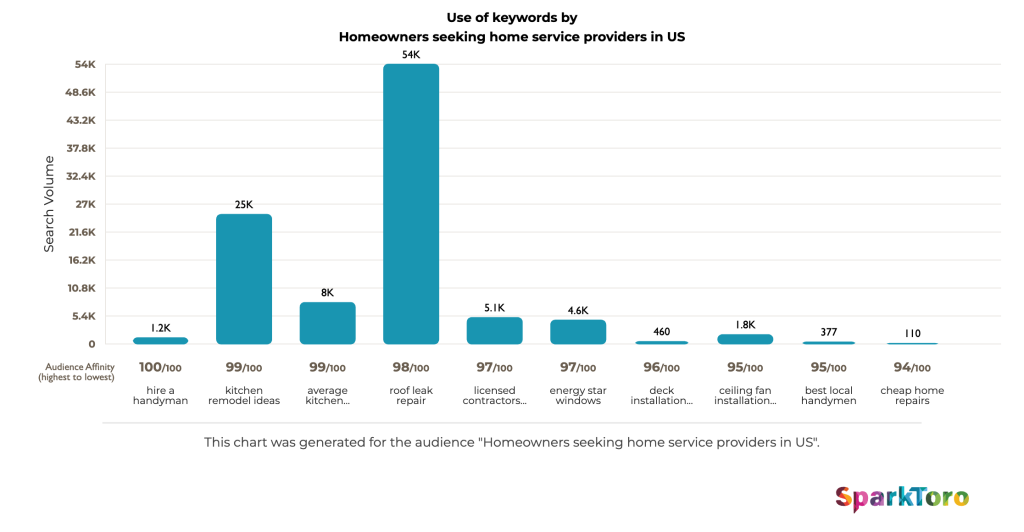
These questions show up clearly in the homeowner keyword data. Some of the top keywords include “hire a handyman,” “average kitchen remodel cost,” “roof leak repair,” “licensed contractors near me,” “ceiling fan installation near me,” “bathroom renovation near me,” and “window installation cost.”
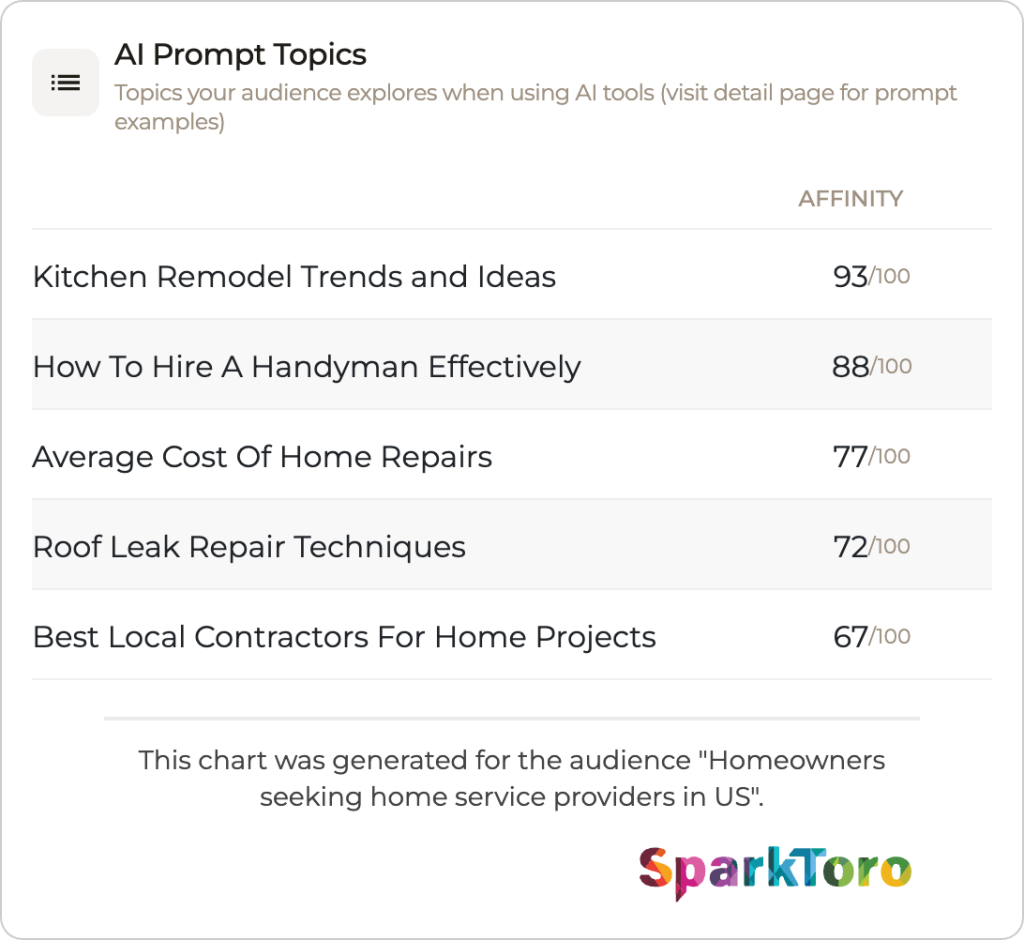
The AI prompt topics tell a similar story: “Home Renovation Tips,” “Affordable Home Repairs,” “Best Local Handymen,” “Average Kitchen Remodel Cost,” “Roof Leak Repair Techniques,” “Find Home Contractors,” and “Licensed Contractors Near Me.”
That changes the homeowner-side marketing strategy.
The message shouldn’t start with: “Use our trusted marketplace!”
It should start with the moment of need:
- “Need a ceiling fan installed?”
- “Trying to understand what a kitchen remodel should cost?”
- “Roof leaking?”
- “Need a licensed contractor so you’re not on the hook for workers’ comp insurance?” (Oh, that’s one reason you’d want a licensed contractor!)
A marketplace like Thumbtack can absolutely build brand affinity over time. But at the moment of search, homeowners are usually trying to solve a specific problem. The marketing should meet them there.
Insight #2: Pros want leads, not another profile to manage.
The provider-side data is almost comically direct.
These service pros are searching for things like “join thumbtack,” “thumbtack pros,” “get leads online,” “find customers online,” “grow service business,” “find local clients,” “how to get more jobs,” “lead generation for contractors,” “contractor marketing tools,” and “home service leads.”
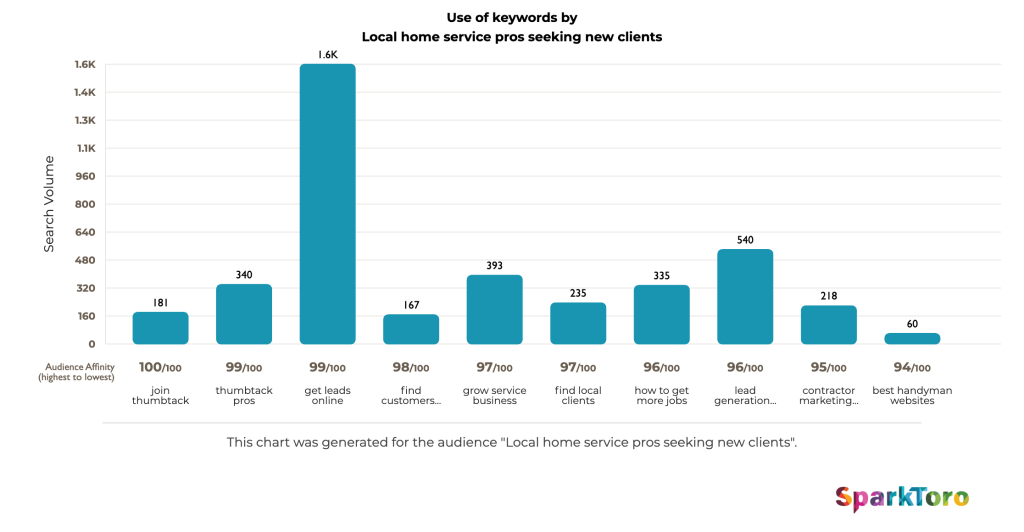
That tells us the pro-side message is not: “Create a profile on our platform.”
It’s: “Fill your schedule with real local jobs without becoming a full-time marketer.”
Because that is the actual job to be done.
These service pros aren’t looking for another dashboard, another account to manage, or another marketplace badge. They’re looking for customers. Ideally good customers. Ones who are local, ready to hire, and not just price-shopping five different contractors before going with the cheapest one and ghosting the contenders.
The “Frequently Visited Websites” data backs this up. Provider affinity shows up around home service marketplaces and contractor business tools, including HomeAdvisor, TaskRabbit, Porch, Handy, Angi, Homeyou, BuildZoom, GetJobber, Joist, ServiceTitan, and more.
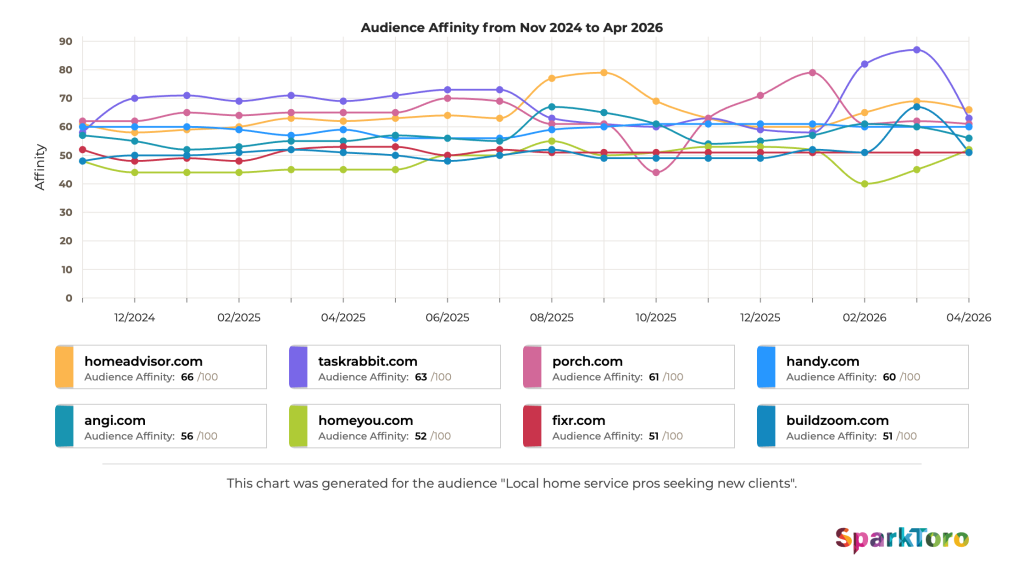
That suggests two different pro-facing marketing paths.
One is lead generation: show service pros how Thumbtack can help them get more of the right jobs.
The other is business growth: help them run a better service business, with content around pricing, scheduling, customer communication, estimates, reviews, and repeat bookings.
A good pro-side campaign should feel less like “come join our app” and more like “here’s how to build a healthier local service business.”
Insight #3: The best marketplace marketing helps both sides trust each other.
The interesting thing about a double-sided marketplace is that the two audiences are different, but their worlds overlap.
Both the homeowner and provider reports show affinity for the same general home services ecosystem: Angi, HomeAdvisor, Porch, TaskRabbit, Homeyou, Fixr, HomeGuide, Modernize, BuildZoom, and related home improvement or contractor directories.
But they enter that ecosystem with different anxieties.
Homeowners are asking: Can I trust this person? What should this cost? Am I going to get ripped off? How urgent is this problem?
Pros are asking: How do I avoid tire-kickers? Can I get better local clients? How do I stand out from competitors? How do I grow without spending all day on marketing?
That’s the marketplace flywheel.
Homeowners need confidence that they can find reliable pros. Pros need confidence that the platform can send them real demand. The best marketing should make each side more confident in the other.
Here’s an example, showcasing three distinct marketing jobs to be done:
- A homeowner-facing “What should this cost?” guide helps homeowners make better decisions. But it also signals to pros that the platform is attracting high-intent customers.
- A pro-facing “How to win better local jobs” guide helps service providers improve their business. But it also reassures homeowners that the platform cares about pro quality.
- A campaign around “how to hire without getting burned” attracts homeowners, but it can also set expectations that help good pros win.
The strategic opportunity is in creating assets that serve one side directly and strengthen trust in the marketplace overall.
What we’d actually do with this
For homeowners, we would build content and campaigns around specific jobs and trust moments:
- “What should this cost?”
- “When should you DIY vs. hire?”
- “How to spot a reliable pro”
- “What to ask before hiring a contractor”
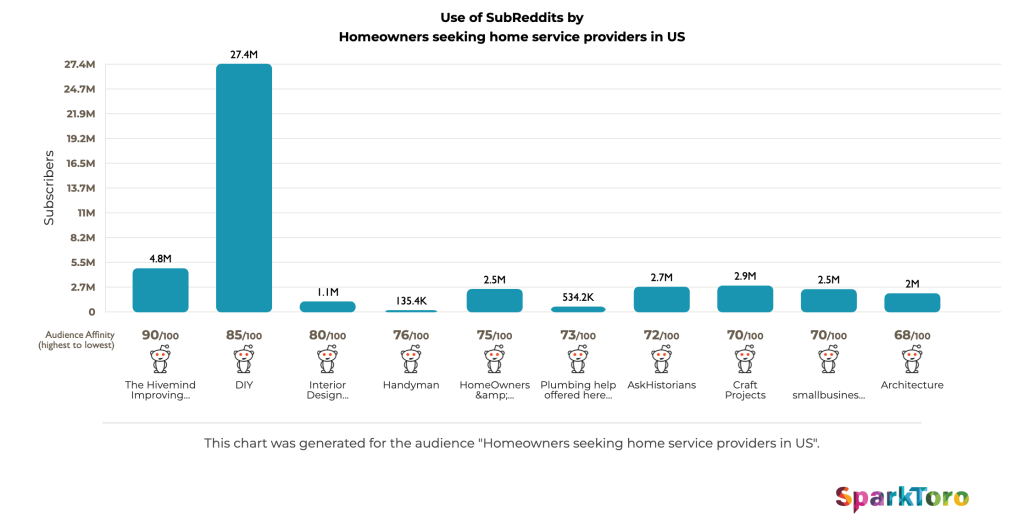
Distribution-wise, we would look hard at search, YouTube, Reddit, and home improvement media. The homeowner report shows strong affinity for YouTube, Facebook, Reddit, Instagram, and LinkedIn; it also surfaces relevant subreddits like r/HomeImprovement, r/DIY, r/InteriorDesign, r/PropertyManagement, r/Plumbing, r/Crafts, and more.
For pros, we would build around lead quality, local demand, and business growth:
- “How to get more local clients”
- “How to turn more estimates into booked jobs”
- “How to avoid bad-fit leads”
- “How to price jobs profitably”
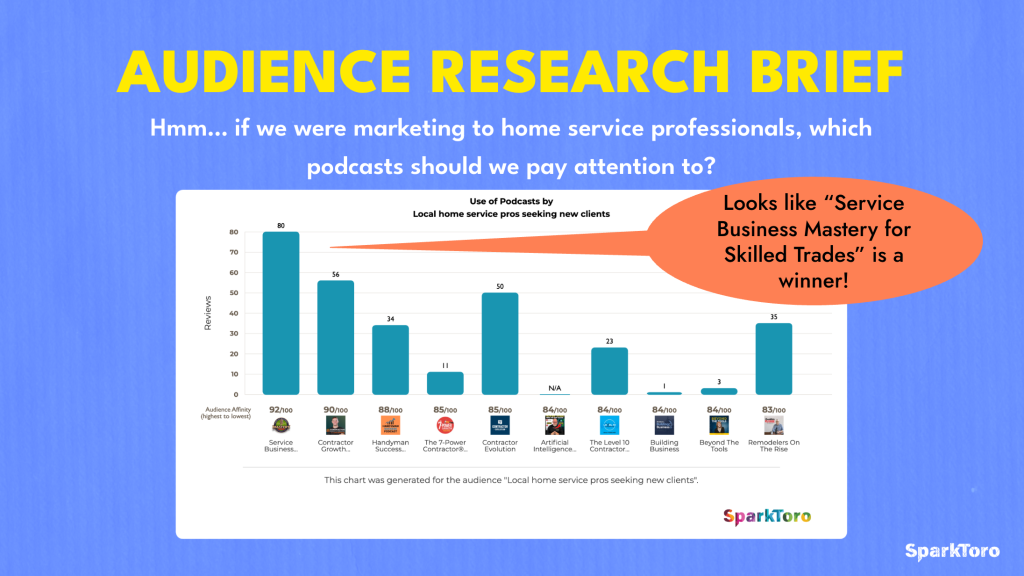
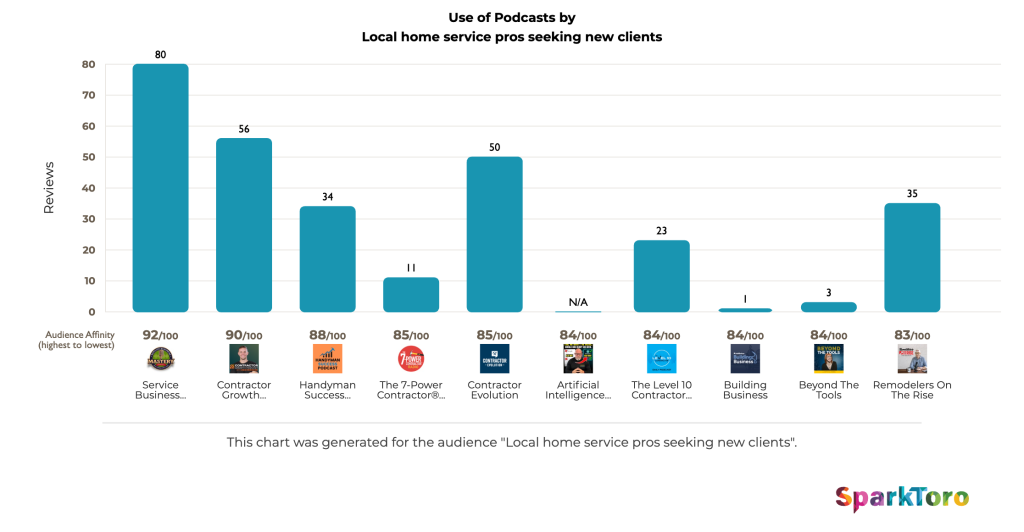
Distribution-wise, we would test partnerships with contractor business podcasts and trade-adjacent creators. The provider report surfaces shows like Service Business Mastery, Contractor Growth Network, Handyman Success Podcast, Handyman Pros Radio Show, and Hammer & Grind.
A double-sided marketplace doesn’t just need more traffic; it needs confidence on both sides. Homeowners need to believe they can find the right person for the job. Pros need to believe the platform can help them win jobs worth taking. The best marketing strategy succeeds in both.