What Pokemon Pokopia Taught Me About the Future of Marketing
I have a marketing prediction: “Made entirely by humans” will become a premium signal. As AI tools make it easier than ever to produce more content, the work that exhibits human creativity and originality will become more valuable. I think we’ll start to see people seeking out human-made work, and paying a premium for the things that demonstrate care and good taste. I mean, it’s kind of already happening now — most obviously with stated preferences. Nobody (sane) is saying they want to consume AI-generated movies and TV shows, or books and blogs.
So… I’ve been playing Pokemon Pokopia. If you’re unfamiliar with this video game, a.k.a. you’re not one of the 5 million Dittos building a better future today, the thing to know is that you’re rebuilding the world with Pokemon and for Pokemon. You make habitats, construct buildings, decorate spaces, and encourage Pokemon to interact with the things you’ve made. There’s cute music and even cuter Pokemon. Part of what I love is that I get to be creative without having to master a traditional creative skill. I don’t know how to paint or draw. The only physically artistic thing I can do is write in cursive, but even then, when I write out my own name, it just looks like a giant sperm. Pokopia gives me a set of tools that lets me build something entirely my own in a cohesive, well-defined aesthetic.
Recently, I tried to build a medieval street in an area called Rocky Ridges, but I didn’t have enough room. So I shifted focus and adapted.
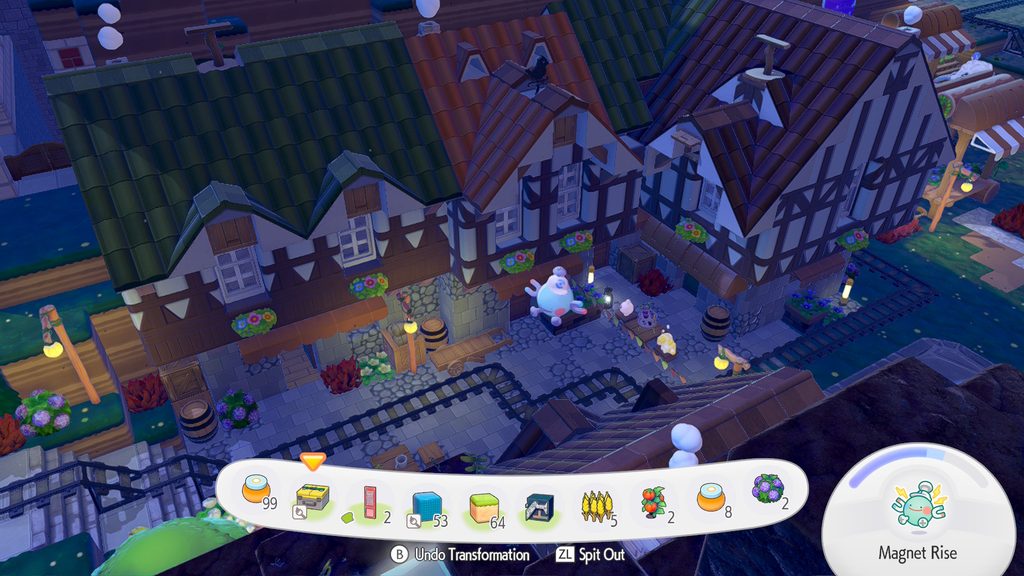
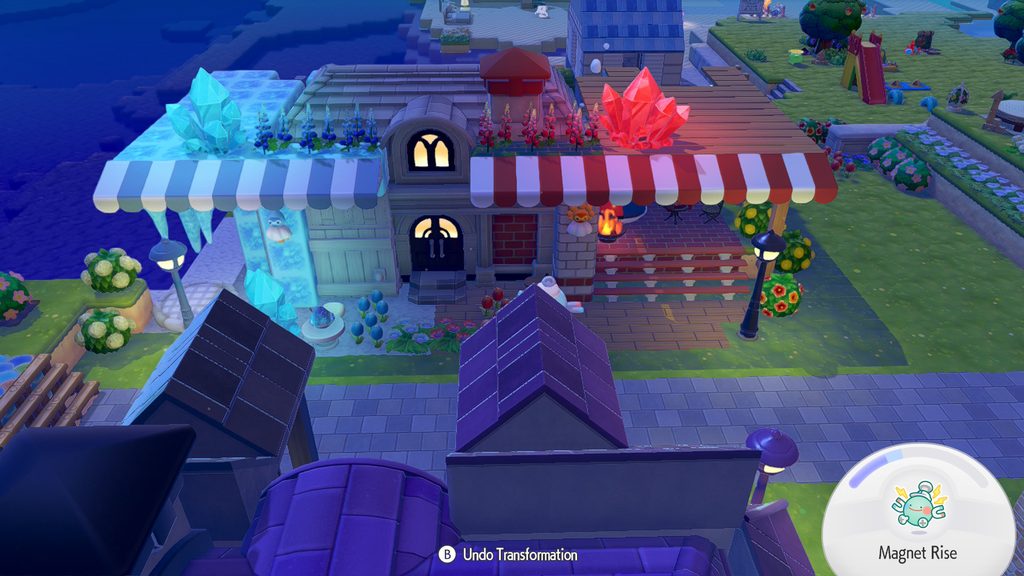
I converted a castle-like structure into a fine dining restaurant for Chef Dante.
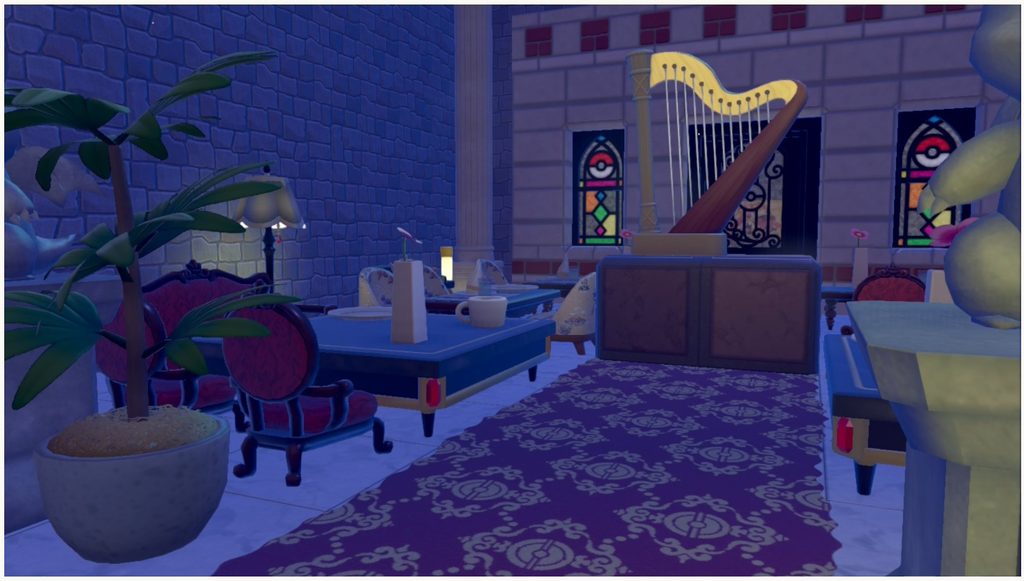
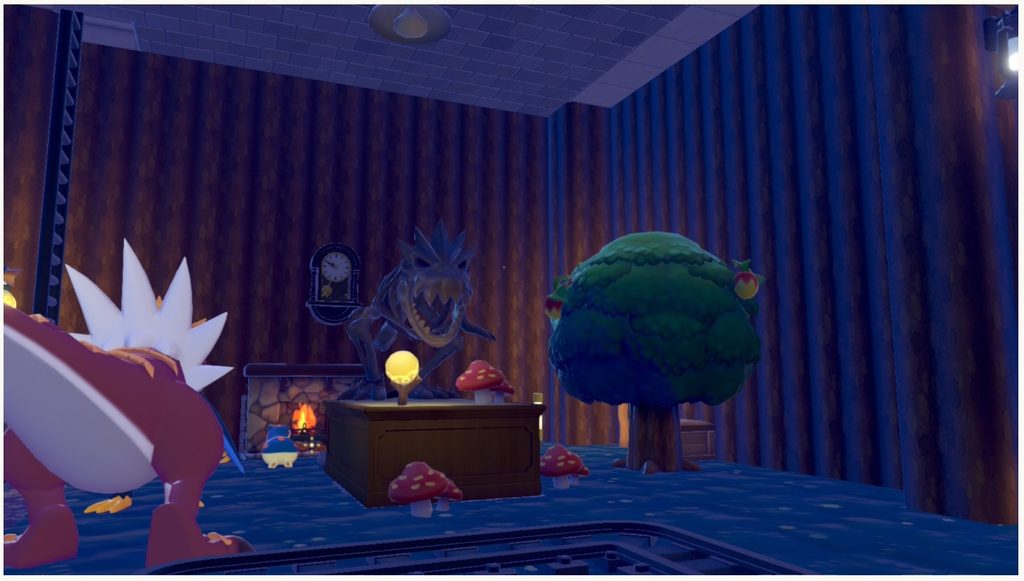
I created a sitting area with a dinosaur fossil exhibit.
I built rustic market stalls, including a flower cart and tea stand, and added cash registers to guarantee Pokemon interaction. The result was completely different from what I’d originally envisioned.
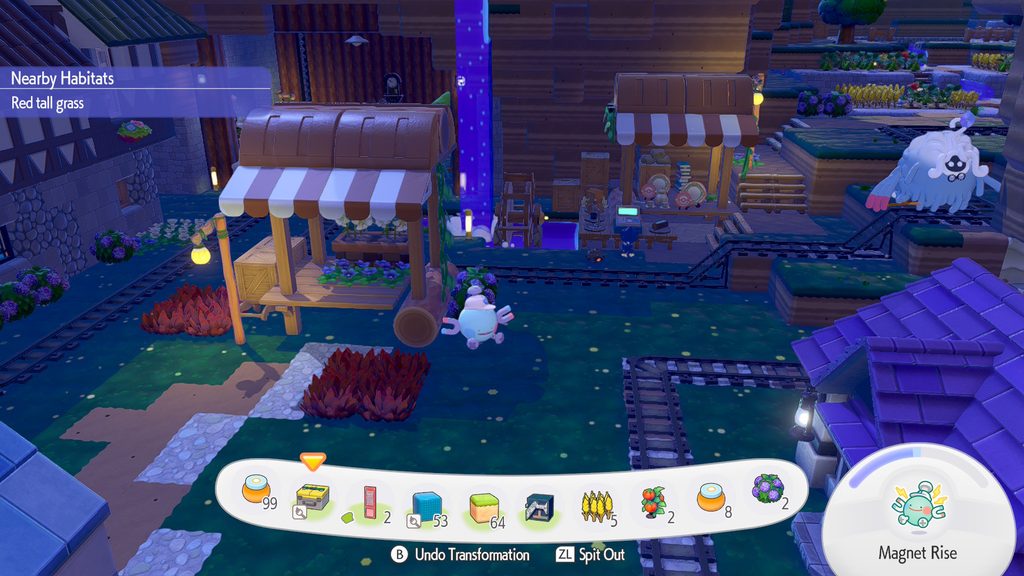
And I liked it better.
The best part was watching the Pokemon actually use the space. Seeing them sell their wares, playing with their toys, and napping on chairs. Quel plaisir! (I don’t know why I said that. I can’t even speak French. I guess it just felt right.)
There was no reason for any of this. This was not a job I was hired for. There was no deadline. And the only customers waiting for me to complete it were my little ‘mon, toddling about aimlessly.
I was just playing.
Then I got to thinking about what it taught me about B2B sales the future of marketing. (I wish I could bridge this thought better by way of Marcel Proust’s “Remembrance of Things Past” but I read that in high school which means… I didn’t actually read it, and I don’t remember it. I just remember my teacher Mr. Beckham [no, not David] talking about the importance of play.)
What happens when we automate the creative process?
AI is making it possible for marketers to produce more work with fewer resources.
You might hate me for saying this, but… I actually find that idea pretty exciting. And in some ways, it’s what I appreciate about Pokopia. The game removes technical barriers that might otherwise prevent me from expressing a vision. But, of course, there’s a difference between making creativity more accessible and outsourcing the creative decisions themselves.
Imagine if Pokopia introduced a feature where I could type a prompt describing my dream village and the game would build it instantly.
I’d probably try it out of sheer curiosity. Though I sure as heck wouldn’t enjoy it nearly as much. The joy I get from this game is imagining something, trying to make it, encountering obstacles, changing my mind, and stumbling upon something better — or at least more interesting — than I’d originally planned.
I wonder how much of that experience we’re losing in marketing these days. Corporate culture already places enormous pressure on us to do more, faster. More content. More campaigns. More channels. More measurable results. AI offers an obvious solution: outsource more of the work to a computer. But if we automate too much of the creative process, we may also eliminate some of the opportunities that help us become better creative thinkers.
Taste takes practice
Consider two marketers:
One spends years building their campaigns, making mistakes (and scoring wins too), learning what resonates with audiences, and improving their work. The other becomes exceptionally proficient at using AI to generate campaigns and selecting the best outputs.
They both might produce great work and have solid judgment. But I suspect the first marketer would have practiced skills the second hasn’t had to: real-world problem solving, improvising when things go wrong, and discovering opportunities through the act of making stuff. Those are the skills I expect will become more valuable, and those are the skills I’m interested in honing myself.
As AI makes passable creative work easier to produce, distinctiveness will become harder to find. There’s actually a 2024 study that points to this. It found that writers assisted by generative AI were able to produce stories that were rated as more creative, but those stories were also more similar to one another. So while AI can be helpful on a case by case basis, there’s the implication that at scale, it also produces a lot less novel content.
We need room to play
Play gives us something that optimized production workflows don’t: the freedom to experiment without knowing exactly what the outcome should be. The enjoyment of that is exactly what matters. We keep playing because it’s fun. And so we keep trying out new things, exploring other ideas, satiating curiosities.
I know it’s possible to develop creative judgment through disciplined work, too. But… where’s the fun in discipline? Nobody aspires to being serious. Ever since I was a little girl, I knew I wanted to write articles and make comics and share jokes and take pictures and choose color palettes — as a magazine editor. Sure, I became a content marketer instead, but you see the similarities. Call me crazy, but I never dreamed of paying investors dividends. (No offense, SparkToro investors?)
So I also think that marketing leaders have a responsibility here. If AI makes teams more productive, — and actually, this is probably a post for another day, but spoiler: it doesn’t, says Harvard on pg. 4 — then we have a choice. We can fill every newly available hour with more work requests, or we can protect some of that time for experimentation and professional/creative development.
And yes, individual marketers can make choices about which parts of their work they want to automate. But knowing what to automate takes discernment, and yup, good taste, too. You could automate a rote this-for-that task, like populating a cell in a spreadsheet from an updated dataset. But you might be sorry for delegating away creative brief intake to an AI agent, because you’ll miss out on the context of your own business needs. Because the goal in any marketing job isn’t just to market more. It should be to become better at making and marketing things that are worth paying attention to.
The premium on human creativity
Back to my original thesis, that “made entirely by humans” will become a premium signal. But 100% human-made doesn’t necessarily guarantee a high bar for quality. Rather, the marketers and creators who earn that premium will be the ones who honed the skills and decision-making that can’t simply be predicted one token at a time: mature creative judgment, distinctive taste, and an original perspective.
AI can help us make things. It can also help us experiment, explore possibilities, and get past the blank page faster. But it’s on us to make sure we actually continue exercising the creative muscles ourselves. If we lose the opportunity or the inclination to play, we risk atrophying some of the very skills that will make us valuable in the future.
And with that, I’m going to take a break to tear down the row of shops I built in Palette Town, and start building some prefab houses with manually-built facades. For the Eeveelutions, Pikachu, and Smeargle, of course.
By the way, this essay was also inspired by a 2027 predictions video I made with Semrush. I hope you’ll check that out next. I get a little chaotic in the middle (shocking, I know), but I think it’s a fun watch. 🙂