Algorithms Don’t Just Happen to Us — We Train Them.
Everyone’s really mad about iced coffee right now. “Don’t bring it to job interviews!” one Fortune 500 recruiter said. “Shut up, you bootlickers!” Starbies fans everywhere slammed their cold, clinky, sweaty cups on their desks. If you know, you know. If you don’t, I might be losing you but please, stay with me! There’s a payoff.
The iced coffee debate is currently all over my Threads feed, governed by an algorithm that reliably spits out post after post on life’s tiny indignities and the lowest stakes debates you’ve ever seen. And it is, unfortunately, an algorithm that I myself built brick by brick.
I’m not proud of it, but I do lurk on all the nonsense. I snicker over people dunking on some dude because his Hinge profile specifically requests women at least seven years younger than him. Or I gasp at the person whose neighbor has a really, really rancid smell coming from their house. It doesn’t sound dental, but alas, this is Richard’s wife. And he has passed. Wait, I’m losing you again. Where was I? Algorithms! We blame those darned things when our content doesn’t perform well or when we see the HYROX diarrhea lady for the 20th time in our feed. But the thing is, algorithms don’t merely happen to us. We train them through our behavior.
That’s true on social, where every pause, click, comment, and quick scroll-away gives the system another clue about what might hold our attention next. And it’s true in search, too. Google has long used aggregate click behavior as one of many signals for judging which results seem relevant — including whether people click a result and then quickly return to the search page.
TL;DR: people behave, machines watch, and the systems adjust.
So I pause on the dumb iced coffee discourse. Threads notices. I read the comments. Threads notices. I come back tomorrow and somehow there’s another extremely low-stakes argument waiting for me. (Maybe I’ll get another update about the HYROX incident? Maybe Pooma Puma will weigh in? This joke literally wrote itself.)
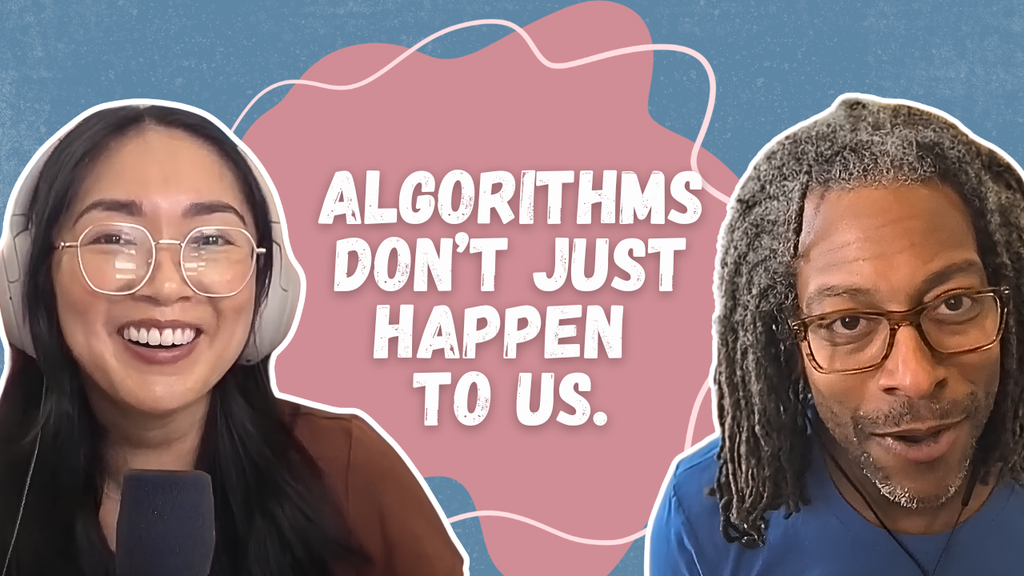
The algorithm is trying to figure out what I care about based on what I do. Which got me thinking about something Wil Reynolds said when he joined me on the Zero Click Marketing podcast:
“Google and AI are just proxies for human trust.”
Social media algorithms are also trying to model human behavior. Different systems, same basic problem: machines trying to understand people based on our digital actions (or inactions, when you quickly scroll away from that HYROX diarrhea photo). We marketers spend an extraordinary amount of time trying to understand algorithms. Meanwhile, the algorithms are working nonstop trying to understand us.
And maybe we’re starting in the wrong place.
Think about what’s actually happening when somebody sends your article to a coworker in Slack. Or saves your research in NotebookLM. Or cites you in a presentation. Or writes an unsolicited review because they had such a good experience that they wanted other people to know. (I would show you my 400-word Yelp review for my orthodontist but that would be a clear HIPAA violation. I know this because I am a medical doctor.) All of these are human behaviors. Some create signals machines can observe. Others might never leave WhatsApp or the conference room. Either way, they tell us that a person decided this was worth trusting, saving, sharing, or recommending.
Wil told me he loves seeing referral traffic from places like Teams, Google Docs, NotebookLM, calendars, and internal learning platforms. Someone had to decide his content was worth putting there. To him, that’s evidence that he earned a human’s trust — not simply an algorithm’s attention.
Now this brings us to marketers’ (or executives’?) obsession with AI visibility. We’re asking: How do I get ChatGPT to recommend my company? How do I appear in AI Overviews? How do I become one of the brands associated with this topic?
Fair questions. But start from first principles. Ask yourself: Why would a person recommend your company? And to whom? Why would someone cite your research? Why would journalists cover you? Why would customers repeatedly describe you as great at the thing you say you’re great at?
In our conversation, Wil described how AI systems can look beyond what companies say about themselves and toward the evidence surrounding those claims. His shorthand for the marketer’s job was basically: bring receipts. When an AI answer repeatedly surfaced criticism about account-manager turnover at Seer Interactive, he didn’t start by figuring out how to suppress the answer. He went to HR and checked the actual turnover data. Then he published what it’s like to work at Seer Interactive today. He saw the receipt AI surfaced (a several years old review) and then he made a new one.
That’s the work. So is creating something useful enough to forward to a coworker. So is building a product customers voluntarily recommend. So is earning coverage. So is becoming genuinely known for an idea through years of contributing something worthwhile to the conversation. Eventually, somewhere downstream, an algorithm might notice — because algorithms are downstream of human behavior. They’re just intermediaries. They’re moody and fickle. Their nuts and bolts change constantly, but they’re continually trying to interpret signals about what humans find interesting, useful, credible, relevant, or worth recommending. You can spend your career chasing changes in how the proxy interprets those signals. Or you can get much better at creating things people choose to trust, save, cite, share, and recommend.
So by all means, learn how Google works. Learn how LinkedIn works. Learn how AI systems surface brands. But don’t confuse the proxy for the goal. Understand the people the proxy is trying to understand.
Otherwise, straight to marketing hopital.
(Yeah, you really gotta get on Threads. Or maybe don’t. Stay far away from hopital and urchin care and bowel movements on shared machines at exercise competitions.)
This unhinged post is brought to you by Amanda eating too many green apple sour belts. The meaningful insights came from her interview with Wil Reynolds on the Zero Click Marketing podcast. For even more meaning, definitely check out the podcast. For more unhinged thoughts, you can find her on social media or subscribe to her personal newsletter. She is also literally the one typing this and she has no idea why she’s still referring to herself in third person.